Two-stroke UAV & drone piston engines
UAV engines for drones from 60 to 270 kg MTOW
Eight two-stroke piston engines from 120cc to 730cc, 8–47 kW, in carburetor and EFI versions. Every model is built on production lines in China and Malaysia, and you choose the country of origin.
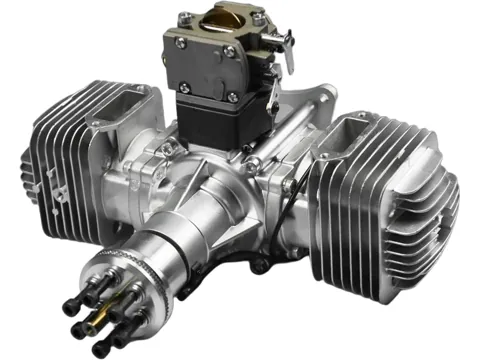
120–730ccTwin and flat-four engines
8–47 kW11 to 63.5 hp
Up to 75 kgStatic thrust at 100 m
CN + MYOrigin chosen per order
UAV engine selector
Compare all models by aircraft take-off weight
Each engine is paired with the maximum take-off weight (MTOW) it is rated for. Filter by weight class, then open a model for full specifications.
| Model | Displacement | Power | Static thrust (100 m) | Aircraft MTOW | Engine weight | Versions | Link |
|---|---|---|---|---|---|---|---|
| Horizontally opposed twin, air-cooled | 120 cc | 8.25 kW | 26.5 kg | 60 kg | 3.05 kg | Carburetor / EFI | Specs → |
| Horizontally opposed twin, air-cooled | 170 cc | 10.8 kW | 35 kg | 80 kg | 3.93 kg | Carburetor / EFI | Specs → |
| Horizontally opposed four-cylinder, air-cooled | 222 cc | 11.8 kW | 45 kg | On request | 5.8 kg | Carburetor / EFI | Specs → |
| Horizontally opposed twin, air-cooled | 274 cc | 15–18 kW | On request | On request | 7.8 kg | Carburetor / EFI | Specs → |
| Twin-cylinder, air-cooled | 350 cc | 21.6 kW | 47.5 kg | 150 kg | 11.46 kg | Carburetor / EFI | Specs → |
| Twin-cylinder, water-cooled | 350 cc | 21.6 kW | 47.5 kg | 150 kg | On request | Carburetor / EFI | Specs → |
| Horizontally opposed four-cylinder, air-cooled | 548 cc | 37 kW | 70 kg | 220 kg | 20.2 kg | Carburetor / EFI | Specs → |
| Horizontally opposed four-cylinder, air-cooled | 730 cc | 47.3 kW | 75 kg | 270 kg | 18.5 kg | Carburetor / EFI | Specs → |
Static thrust measured at 100 m altitude with the reference propeller. "On request": figure to be confirmed for your configuration.
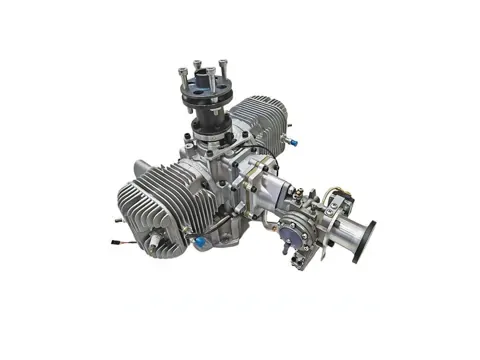
350cc twins, air & water-cooled
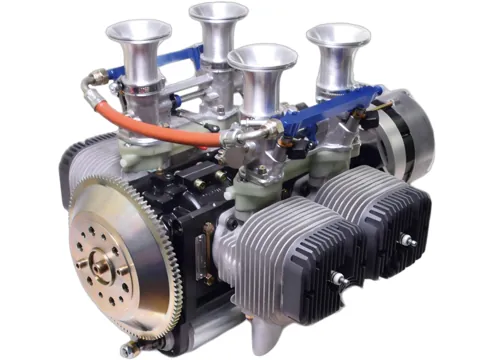
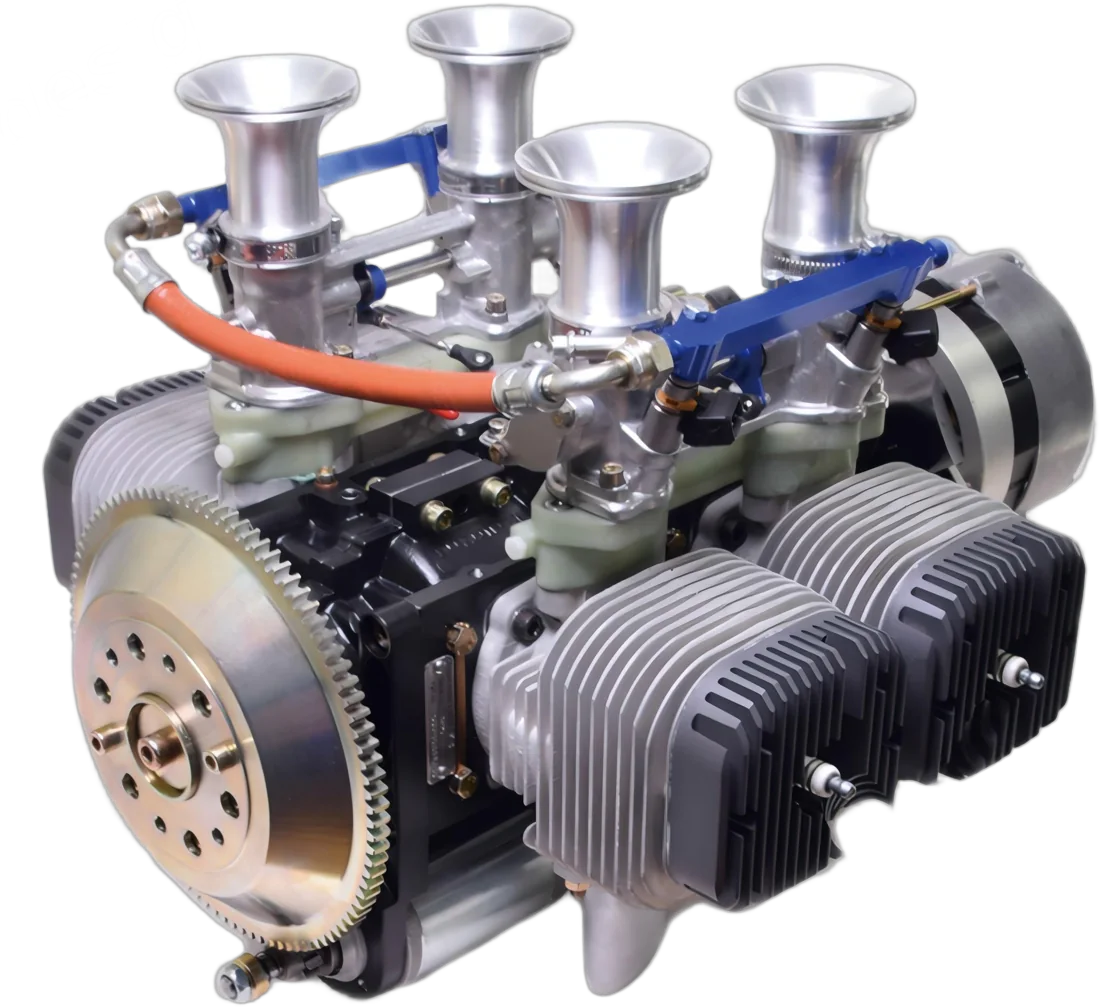
Flat-four engines
All UAV engines
Eight engines, one range
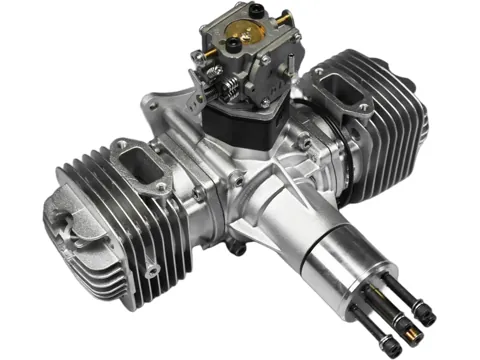
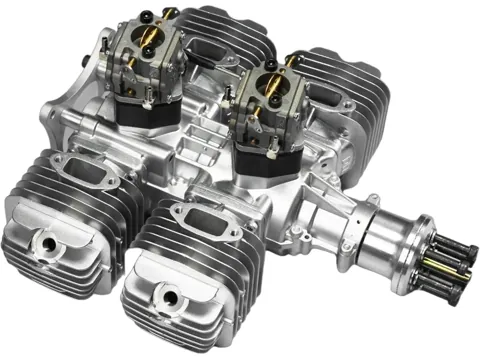
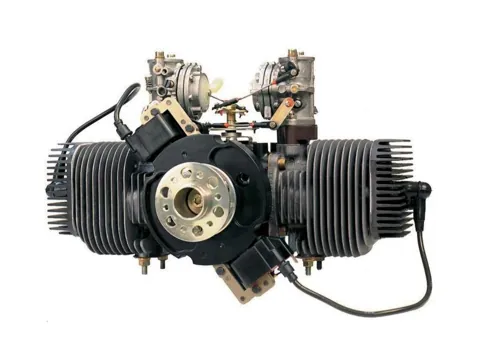
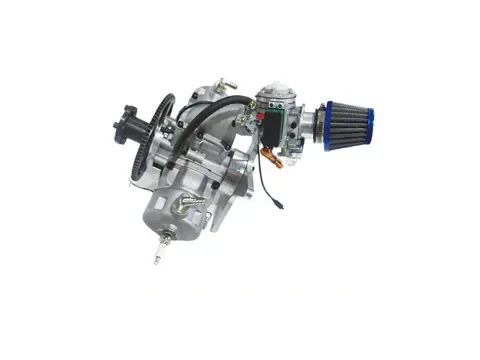
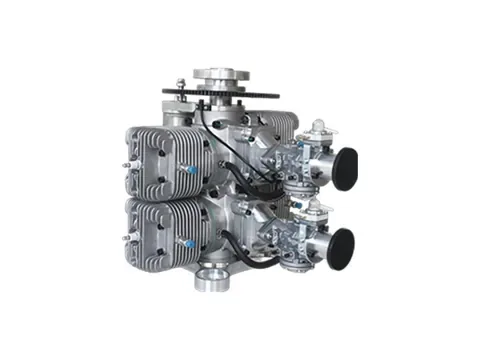
UP-730
730cc flat-four, 47.3 kW (63.5 hp), 75 kg static thrust, up to 270 kg MTOW.
View specifications →Dual-site manufacturing
One engine range, two production lines, your choice of origin
Every UAV engine we sell is built in both China and Malaysia. Tell us your destination and compliance needs and we ship from the line that fits, with a certificate of origin that matches.
How dual-site manufacturing works →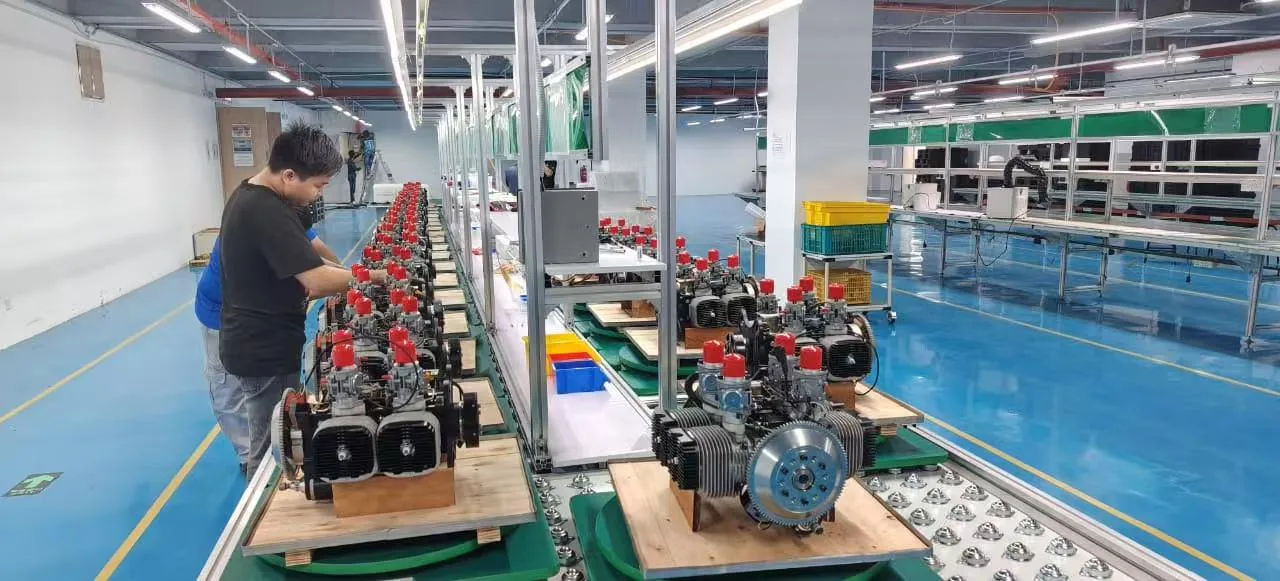
Made in Malaysia
For programmes that require non-China origin. Certificate of origin issued for the Malaysian line.
Made in China
Cost-efficient supply from the China line, with matching certificate of origin.
Same engine, same specification
Every model in the range is built on both lines to one specification, so you can qualify one engine and source it from either site.
OEM configuration
Carburetor or EFI, starter, 600 W–2 kW generator, exhaust, and tractor or pusher installation.
Applications
Drone engines built for these platforms
Fixed-wing UAVs
Long-endurance mapping, survey, pipeline and patrol aircraft.
VTOL fixed-wing
Piston engine for cruise, electric motors for vertical take-off and landing.
Unmanned helicopters
Cargo, crop-spraying and inspection rotorcraft.
Hybrid multirotors
Engine-generator power units for heavy-lift, long-endurance drones.
Engineering guides
Choosing and integrating a UAV engine
Selection guide
How to Choose a UAV Engine: MTOW, Thrust, Altitude and Fuel System
How to size a two-stroke UAV engine: start from MTOW and static thrust, then check altitude, propeller, cooling and fuel system. With a model-by-model table.
TechnicalCarburetor vs EFI UAV Engines: Fuel Use, Altitude and Cost Compared
EFI UAV engines use about 25–30% less fuel and adapt to altitude automatically; carburetor engines are simpler and cheaper. Data from 120cc to 730cc engines.
Hybrid powerSizing an Engine-Generator for Hybrid Multirotor Drones
How to size a gasoline engine and generator for a hybrid multirotor drone: hover power, margins, generator efficiency and engine choice, with a worked example.
FAQ
UAV engine questions, answered
How do I choose the right UAV engine for my aircraft?
Start from the maximum take-off weight (MTOW) and the static thrust you need. In our range each engine is paired with an MTOW where its static thrust is roughly 30–45% of take-off weight: the UP-120 for about 60 kg, the UP-170 for 80 kg, the UP-350 for 150 kg, the UP-550 for 220 kg and the UP-730 for 270 kg. Then check propeller size, operating altitude, fuel system and cooling. The engine selector lists all models side by side.
Why use a two-stroke piston engine instead of electric propulsion?
Gasoline carries far more energy per kilogram than batteries, so a piston engine gives fixed-wing and VTOL UAVs hours of endurance instead of minutes. Two-stroke engines also have the best power-to-weight ratio of piston engines and fewer moving parts than four-strokes, which keeps maintenance simple. Electric motors remain the better choice for small, short-range drones.
What is the difference between the carburetor and EFI versions?
EFI (electronic fuel injection) uses an ECU to meter fuel, which in our catalog data cuts fuel consumption by about 25–30% (for example 14 L/h to 10 L/h on the UP-550) and keeps the mixture correct as altitude and temperature change. The carburetor version is simpler, lighter on electronics and lower in cost. Most models are available in both versions.
Can these engines drive a generator for hybrid drones?
Yes. Generator options range from 600 W on the UP-120 and UP-170, through 1.2 kW (28 V) on the UP-275 and UP-550, to 800 W or 2 kW units on the UP-350 and UP-730. For hybrid multirotors the engine-generator set charges the batteries and supplies the lift motors in flight. See our guide to sizing an engine-generator.
Where are the engines manufactured?
Every model is built on two production lines, one in China and one in Malaysia. You can choose the country of origin for each order, and the certificate of origin and shipping documents match the line the engine was actually built on. This lets programmes with origin requirements source the same engine as everyone else.
What fuel and oil do the engines use?
Most models run on 95-octane unleaded gasoline or 100LL avgas (the UP-275 accepts 92-octane), pre-mixed with two-stroke oil. The mixing ratio depends on the model, from 20:1 on the UP-350 to 50:1 on the UP-275 and UP-550; the exact ratio is on each product page and in the manual.
How much does performance drop at altitude?
Static thrust measured at 1,800 m is roughly 7–12% lower than at 100 m across the range: for example 70 kg to 61.8 kg on the UP-550 and 75 kg to 70 kg on the UP-730. For high-altitude operations the EFI version is recommended because the ECU corrects the fuel mixture automatically.
Can you customize engines for an OEM programme?
Yes. Options include carburetor or EFI fuel systems, starters, generators, exhaust pipes, electronic ignition and push or pull (tractor or pusher) installation. Tell us about the airframe and mission and we will propose a configuration and confirm what the factory can supply.
Do you sell sample units, and what is the minimum order?
Send us your model, version and quantity through the contact form or WhatsApp. We confirm availability of evaluation units, volume pricing and lead time in the quotation, so prototype programmes and series production are both quoted.
How are engines shipped, and how long does delivery take?
Engines ship worldwide from China or Malaysia by express courier, air freight or sea freight. Lead time depends on the model, the fuel system version and the production line, and is confirmed in writing with every quotation.
Are spare parts and technical support available?
Yes. Pistons, rings, gaskets, carburetor kits, ignition parts and other wear items are supplied for every model, and many parts are shared between engines that use the same cylinder. Our team answers installation, propeller and tuning questions by email and WhatsApp.
Do UAV engine exports require a licence?
Some can. Drone engines above certain power levels are treated as dual-use items by several countries, so higher-power models may need an export licence and an end-user statement. We screen every order, ship only to legitimate civil and commercial end users, and do not supply sanctioned destinations or parties.
Request a quote
Get pricing, lead time and the full datasheet
Tell us about your aircraft and mission. We reply with a recommended engine configuration, pricing and delivery time.
WhatsApp+86 131 4990 0919